The right and wrong water
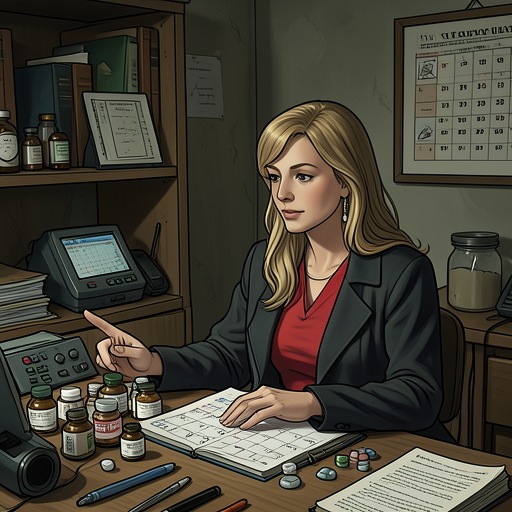
Hot MilkThe right and wrong water is a recurring problem in Sofia Papastergiadis’s care of her ill mother, Rose Papastergiadis: Rose asks for water, but Sofia cannot be sure which water will answer the need. The motif turns an ordinary household task into a measure of their strained, intimate dependence. Its uncertainty persists from the bedroom to the clinic, where a doctor identifies dehydration even as Rose continues to ask whether the water offered to her is safe.
Definition and Domestic Setting
The problem is introduced through a sequence of practical choices rather than an abstract definition. Rose may ask for water during the night, while sleeping under a mosquito net in the next room, and Sofia responds by choosing among a bottle kept in the refrigerator, one left outside it, or water boiled in the kettle and allowed to cool. Each option is available; none settles what Rose means by the right water. Sofia says she is no longer sure what water means, but still supplies it as best she understands the request.
That uncertainty makes caregiving an act of interpretation as well as service. Sofia can fulfil the literal request and remain doubtful that she has met its purpose. The repeated distinction between right and wrong does not establish an objective rule about temperature, storage, or preparation; instead, the available details show Sofia trying different forms without gaining certainty. The task therefore carries an emotional burden beyond fetching a drink: she must judge a need that is expressed plainly but whose satisfaction remains unclear.
Care, Dependence, and Responsibility
The pattern is set within Rose’s illness and Sofia’s dependence on the circumstances of her mother’s care. Sofia does not know whether she will still be there a month later; that possibility depends on Rose’s condition. In the meantime, Rose may wake and call for water, and Sofia will get up to bring it. The simple recurring action links an uncertain future to an immediate obligation: whatever else remains unresolved, Rose’s request demands a response in the present.
The motif also gives shape to the difference between intention and outcome. Sofia is not indifferent to Rose’s need; she actively considers several sources and preparations. Yet her effort does not guarantee that the result will feel right to Rose or even to Sofia herself. The phrase “wrong sort of water” thus belongs to the caregiver’s experience as much as to the drink: it marks the possibility that attentive action can still fall short when the need cannot be confidently interpreted.
The Injury Hut and the Search for a Better Answer
During treatment for a jellyfish sting, Sofia notices a small refrigerator in the injury hut and wonders whether it holds bottles of water. She thinks of carbonated and still water, considering how to make water more right for her mother. The thought carries the household problem into a public place where Sofia herself is the patient. Even while the hut’s staff attend to her sting, her attention turns back to Rose and to the possibility of finding a more suitable drink.
The refrigerator’s hum is described as dead and cold yet pulsing, an image that gives the ordinary appliance an uneasy presence. The scene does not resolve Sofia’s search: it supplies more possible water, not a rule for choosing among them. Its importance lies in showing how persistently the question accompanies her. The effort to distinguish between kinds of water has become part of how Sofia thinks about caring for Rose, surfacing even when the immediate reason for being at the hut is Sofia’s own injury.
At the Gómez Clinic
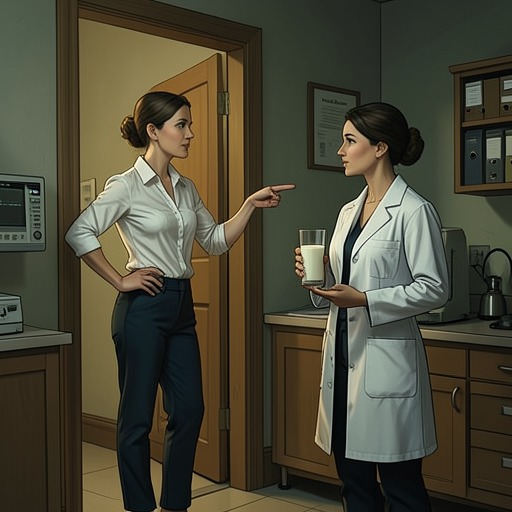
The question returns during Rose’s consultation with Dr Gómez. He says he wants to review her medications and asks which she is attached to and which she can give up. Before that review proceeds, Rose asks for a glass of water. Dr Gómez fills a plastic cup at the basin and carries it to her; Rose asks whether tap water is safe to drink, and he assures her that it is. Sofia watches Rose sip the cloudy water and again wonders whether it is the right sort.
Dr Gómez then asks Rose to stick out her tongue, explaining that it presents visual indicators of general health. After examining her, he says that her tongue indicates dehydration. Rose confirms that she is always thirsty and says Sofia is lazy about putting a glass of water by her bed at night. The exchange gives the recurring uncertainty a concrete clinical consequence: the need is not merely a matter of preference, since Dr Gómez identifies dehydration, but the consultation still does not supply Sofia with a dependable answer to which water Rose will accept or need. Rose’s complaint also introduces the caregiver’s limits into the scene: Sofia has been trying to meet the need, but Rose names an instance in which a glass is not already waiting beside her bed.
Significance
Across these scenes, water is at once a basic bodily need and a test of everyday care. The possible answers remain specific—a refrigerated bottle, an unrefrigerated one, boiled and cooled water, carbonated or still water, or tap water from the clinic basin—while the uncertainty itself remains unresolved. The clinical finding that Rose is dehydrated intensifies the stakes without turning the motif into a simple lesson that one preparation is correct. Rose’s thirst is real; Sofia’s efforts are real; certainty about what will satisfy the need is absent.
The motif also gives the mother-daughter relationship a repeated, material form. Rose calls and asks; Sofia chooses, fetches, and watches. At home, Sofia acts in the night without knowing whether she has understood the request. At the clinic, she observes Rose drink and still questions the water’s adequacy. The recurring doubt makes care visible as work carried out under incomplete knowledge, rather than as effortless devotion or a problem solved once and for all. What remains unsettled is not whether water is needed, but how a caregiver can know that an offered answer is the right one.